
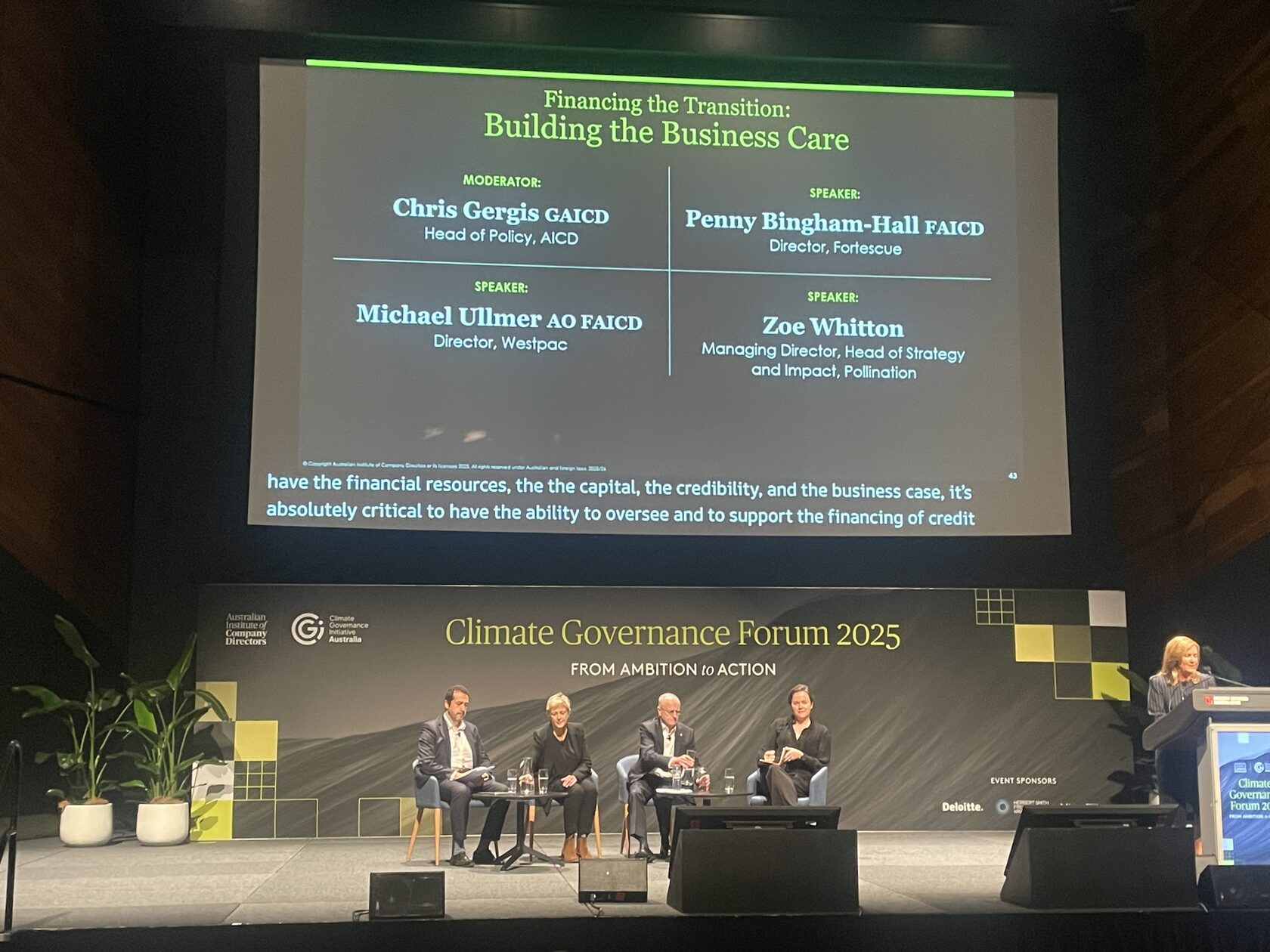
Much has changed in the climate governance landscape since AICD’s last forum on the topic. Mandatory climate reporting is now in place, and the recent federal election delivered a rare degree of climate policy certainty, albeit somewhat overshadowed by developments abroad.
The 2025 AICD Governance Forum explored these topics and more. While climate-related disclosures was unexpectedly a common theme, it didn’t overshadow discussions on transitioning to 1.5-degree-aligned business models and building resilience to the physical impacts of climate change. Underpinning many conversations was the challenge for boards to pursue both, while also managing a host of other pressing issues.
Below are my high-level takeaways across those three themes.
Climate disclosures
1) ASIC expect full compliance with ASRS, I think
Kate O’Rourke from ASIC faced a barrage of audience questions on climate disclosures, deftly moderated by Rebekah Cheney. My interpretation of Kate’s responses—confirmed in several side conversations—was that ASIC expects full compliance with AASB S2, including disclosure of projected financial impacts. Large companies are unlikely to be excused for lacking the capacity or time to meet these requirements.
That said, others were left with the impression that ASIC will take a more lenient, ‘best efforts’ approach. Kate concluded by noting that ASIC is open to feedback on where further guidance is needed, so I’d encourage anyone with questions to contact AISC directly.
2) Climate needs to be deeply integrated into BAU
A recurring theme was that climate can no longer be treated as a standalone issue—it must be integrated into core business functions. Geoff Summerhayes, Chair of Zurich Australia and Heartland Bank, emphasised that this includes embedding climate considerations into capital allocation, opportunity assessments, and M&A decisions.
While mandatory climate disclosures have prompted finance and sustainability teams to work more closely together, climate is still siloed in other respects. Several participants voiced frustration that climate risk management remains too disconnected from the management of other enterprise risks.
3) Get a lawyer to review your climate report, but don't let them write it
Tom Pocket, Chair of IAG and Stockland, had a clear message for directors: qualify every sentence in your climate report and seek extensive legal advice. He was not alone in warning that, despite some initial regulatory relief, there is a wave of class actions waiting for companies to misstep. Throughout the day, directors were urged to review climate disclosures with the same rigour applied to a prospectus or financial statements.
While Tom’s advice was pragmatic, it elicited a groan from some attendees concerned that well-meaning lawyers might strip sustainability reports of any substance. Geoff Summerhayes later noted—with apologies to his legal friends—that we don’t want climate disclosures written by lawyers.
Transition planning
4) Local policy certainty is being overshadowed by global uncertainty
Mark Rigotti (AICD’s CEO) and Vanessa Sullivan (non-executive director at AGL, CSIRO and others) both identified uncertainty over government regulation as one of the two biggest barriers facing boards on climate. While the recent lift in domestic climate policy certainty was welcomed, it is being overshadowed by instability abroad—Australia is experiencing an orderly transition within a global disorderly transition.
Vanessa captured this vividly, describing global policy shifts as governments doing the “climate hokey pokey” (you put your climate policy in, you take your climate policy out), which she sadly didn’t perform for us.
5) 1.5 is still alive (just increasingly difficult)
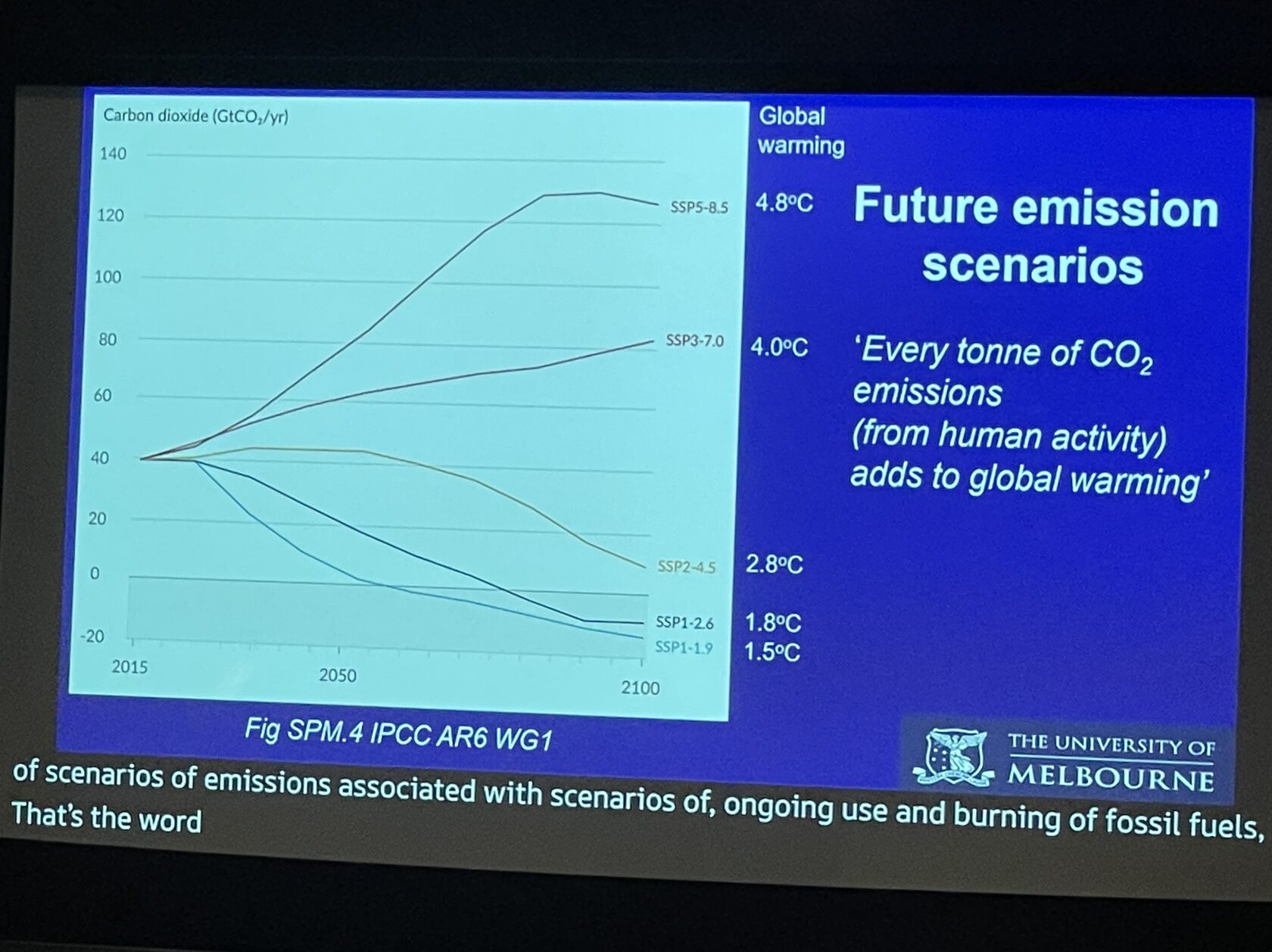
Professor David Karoly delivered an entertaining—if sobering—update on the latest climate science. There was, however, a thin thread of optimism: it remains possible to limit warming to 1.5 degrees in the long run. While we may overshoot temporarily, temperatures could be brought back down if we reach net zero by 2050 and then draw down ten billion tonnes of CO₂ per year. David was not alone in expressing confidence that this is achievable—provided new technologies emerge.
6) When it comes to transition planning, go hard or go home
Referencing recent IGCC research, Zoe Whitton—Managing Director at Pollination and board member of IGCC and the Net Zero Economy Authority—noted that companies with ambitious targets often find them easier, though not easy, to achieve. Counterintuitive as it may seem, ambitious targets drive executive alignment, send clear market signals, and are more likely to rally employee support.
For example, Lendlease’s Net Zero Scope 1 and 2 by 2025 target has made it a lightning rod for companies developing green construction materials, helping to overcome one of the biggest barriers to building decarbonisation.
7) Physical climate risk needs to be managed at a local level
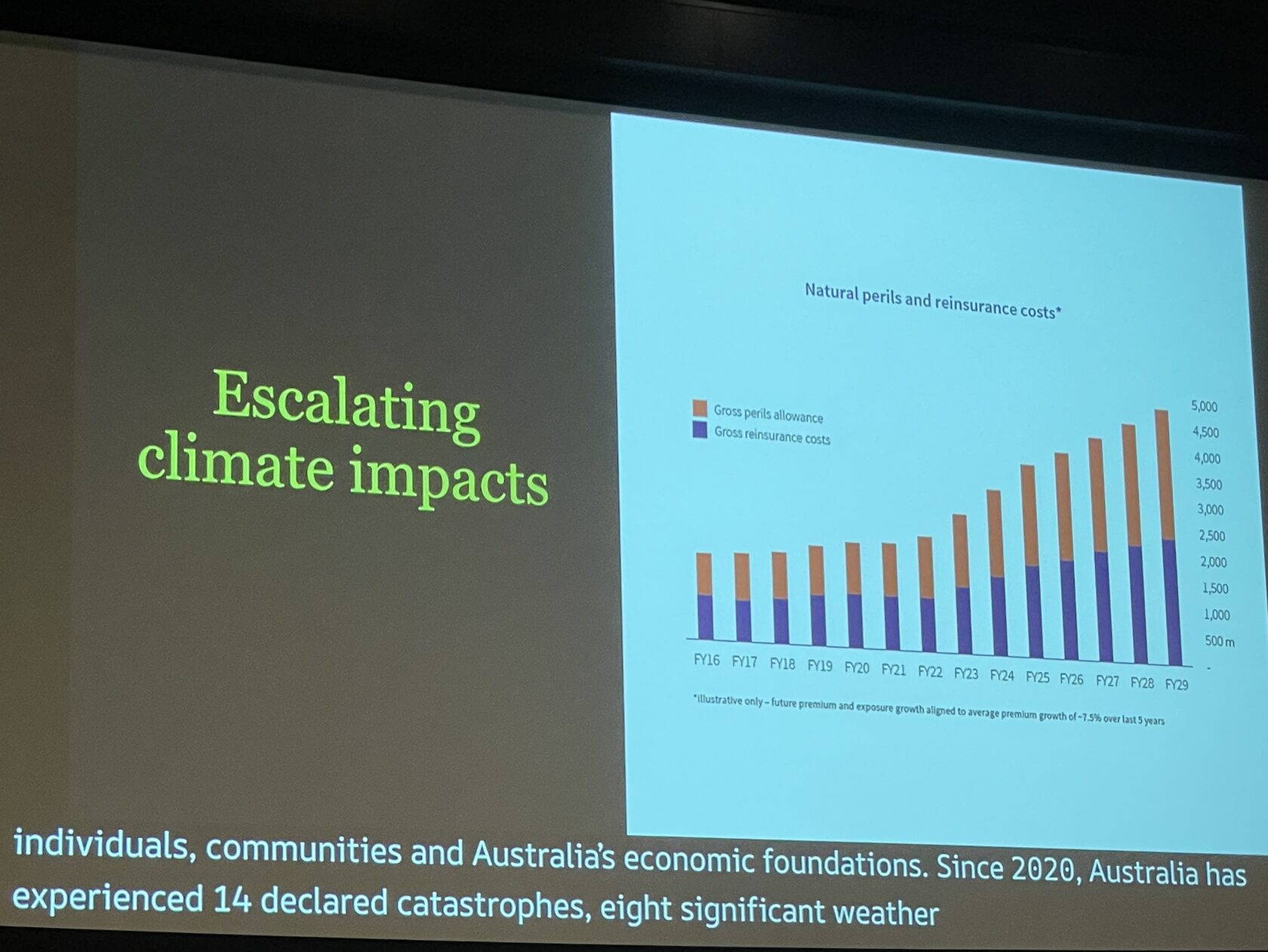
The physical impacts of climate change were front of mind for many, given their immediacy and tangible nature. In his opening keynote, the Chair of IAG noted that $22.5 billion in insured costs had been paid out over the past five years—a 67% increase on the previous five. Professor Karoly explained part of the reason for this increase by highlighting that Australia is warming 40–50% faster than the global average due to its landmass characteristics.
One speaker observed that while transition risk can be addressed at an organisation-wide level, physical risk must be managed locally. This point resonated strongly with the audience and was echoed throughout the day.
Capacity building
8) Climate is competing for board bandwidth
Mark Rigotti identified resource scarcity as one of the two major barriers facing boards, with Geoff Summerhayes agreeing that climate must compete for attention alongside issues such as global conflict and the cost of living. Jeremy Cooper of MinterEllison noted that some companies are exploring the use of advisory boards to help address these capacity constraints.
9) We need to make nature bite-sized
Mark Rigotti also reiterated the familiar refrain that “nature is next”—with three-quarters of company directors viewing it as material to their businesses and a major issue boards will need to address. While I don’t disagree, it feels as though nature has been patiently waiting its turn for quite some time now.
Tom Pocket offered one explanation: the topic is simply too broad for boards to tackle in one go, but breaking it into manageable components—such as water—can help it gain traction.
10) Educate everyone, fast
Education emerged as a recurring theme throughout the day—not just at the board level, but across entire organisations. IAG provided an example of putting this into practice by launching a Sustainability Faculty in May to educate all employees on what sustainability means for their business.
Capacity building is also one of ASIC’s top three priorities for climate disclosures. For example, they are working with the AASB on a program to support Group 3 companies, as well as those affected through the supply chain. Sarah Barker—the queen of catchphrases—has dubbed this latter group “Group X”: companies not directly captured by the legislation but still impacted by it.
Of course, much more emerged from the various plenary sessions, roundtable discussions, and hallway conversations, but hopefully that gives you a flavour. I expect we’ll see plenty more commentary in the week ahead, particularly with AICD trialling a new AI note-taking tool this year.